
Why Facts Alone Aren’t Enough
Have you ever tried to understand something by pulling it apart, only to end up more confused than before?
Picture this: you’re trying to learn more about a frog. So, you dissect it. You see its organs, muscles, and internal structure. You might even spot what’s working and what’s not. But here’s the catch—you’re no longer watching a living frog in motion. You’ve got all the parts, but the bigger picture is gone. You’ve lost the frog’s story—how it survives, adapts, and functions in the real world.
This is the “dissected frog trap”—something we all fall into from time to time. When we’re overwhelmed, uncertain, or stressed, we start over-analysing. We break things down into tiny details, trying to gain control or clarity. But when we zoom in too much, we lose the wider view. We miss the patterns, connections, and causes that only show up when we look at the whole system.
Sure, analysis has its place. It helps us understand what we’re facing. But if we get stuck there—if we focus only on isolated facts or incidents—we risk misjudging the situation. We might overreact, underreact, or fix a symptom without addressing the cause.
It’s like using a map to explore a place you’ve never been. A good map helps. But it can’t show you the sounds, the smells, or the full experience of being there. That’s the difference between knowledge and understanding.
So, what’s the real insight here?
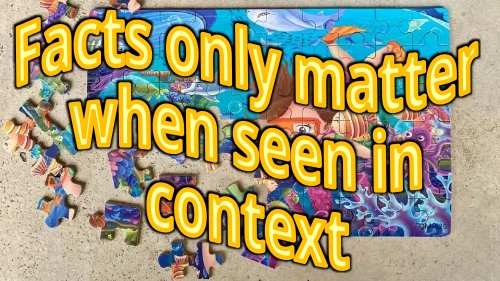
To truly understand something, you need more than just its parts—you need to see how those parts work together. Facts are helpful, but they only come alive when seen in context.
Whether it’s a frog, a problem, or a moment in life… step back, look around, and keep the bigger picture in focus.
Other mental traps worth noting—awareness of these can help you navigate challenges with greater clarity and insight: